ADA and FMLA Overlap Strategy, A CEO-Level Blueprint
By Tiffany David · HR Strategy · November 10, 2026
Stop Winging It: Centralize Power And Scale The Process
Are managers making off-the-cuff promises that unravel your staffing plan? When leaders freelance accommodations and HR chases designations, your ADA and FMLA overlap strategy turns into costly guesswork. Centralize authority fast, or keep paying in rework, grievances, and delayed hiring.
A durable ADA and FMLA overlap strategy means you centralize intake, time-box the interactive process, and document offers that balance essential functions with reasonable accommodation. Do this, and escalations drop while your credibility rises? If you want to see how this looks in practice, review TPM’s core offerings on our Services page and align the playbook to your footprint.
The law sets the floor, not the ceiling. Title VII bans pregnancy discrimination, the ADA requires reasonable accommodation unless it creates undue hardship, and the FMLA grants job-protected leave when eligibility is met. The PWFA and PUMP Act lock in pregnancy and lactation protections, and state paid family and medical leave programs layer on top. A CEO-level model respects all of it without freezing the business. Tiffany David, SPHR Founder of our TPM team has built this with enterprises and high-growth firms in 25 plus industries, and the pattern holds: centralize decision authority, pre-wire operations, and make documentation non-negotiable.
What Makes An ADA And FMLA Overlap Strategy Fail?
An ADA and FMLA overlap strategy fails when you decentralize decisions, ignore documentation discipline, and let local norms trump law. The cost shows up as inconsistent treatment, blown deadlines, and preventable claims.
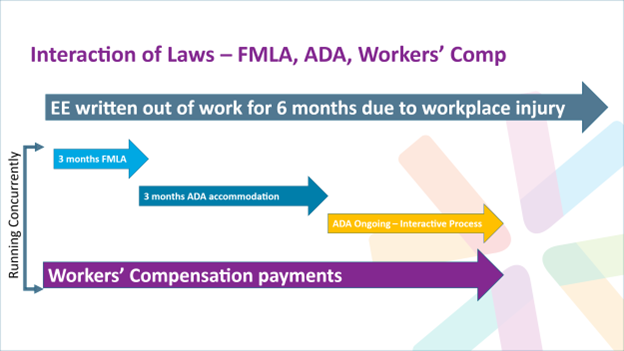
Under the ADA, you must engage in a good-faith interactive process and consider reasonable accommodations tied to essential job functions. Under the FMLA, you must track eligibility, designate qualifying leave, and restore the employee to the same or an equivalent role. When these tracks collide, untrained managers try to grant or deny on the spot, which breaks both regimes. The PWFA, in effect since mid-2023, adds an immediate duty to consider modifications for pregnancy and related conditions, often before medical leave becomes necessary. Leaders who treat pregnancy as only a benefits issue miss this and create exposure fast.
TPM’s consultants, serving 200 plus clients nationwide since 2008, see the same failure modes across sectors. Companies with strong cultures still trip when state paid leave programs, such as California’s Paid Family Leave, sit next to unpaid federal FMLA and ADA accommodation duties. Add lactation requirements under the PUMP Act, and you have four clocks and three standards running at once. Without a centralized accommodation triage, even well-meaning teams stumble. A disciplined ADA and FMLA overlap strategy prevents those collisions.
Granting ad hoc light duty without a consistent light duty and scheduling adjustments framework tied to essential functions
Starting FMLA clock late because the manager never escalated or HR never designated in writing
Skipping the interactive process operating model because a doctor note “seems clear”
Promising “full-time remote forever” without analyzing undue hardship or operational coverage
Failing to run pregnancy and lactation accommodation governance distinct from disability workflow
Letting state paid family leave payments set the schedule instead of legal entitlement windows
The takeaway: a fragmented approach multiplies risk. A single operating model aligns managers, protects employees, and keeps operations predictable.
Two practical checks sharpen your ADA and FMLA overlap strategy here. First, align return-to-work pathways with HIPAA privacy principles so you separate medical details from performance files and limit access. Second, price coverage plans so that leaders see compliance, operations, people impact, and cost together. This twin focus cuts noise and speeds clean decisions.
If you operate in union or high-turnover environments, add a pre-escalation case review. One 20-minute huddle with HR, Operations, and the case owner often prevents a denial that would trigger an avoidable grievance. TPM has run these huddles at scale, and they reduce backtracking while reinforcing your ADA and FMLA overlap strategy.
How Do You Centralize Without Becoming A Call Center?
An ADA and FMLA overlap strategy scales when you centralize decision rights and preserve human coaching at the manager level. You do this by creating one “control tower” that governs process and timelines while People Practitioners coach leaders on the ground.
Build a centralized accommodation triage that captures intake within 24 hours, issues rights and responsibilities in writing, and assigns a dedicated People Practitioner as the case owner. That owner runs the interactive process, not an outsourced script. Be sure to anchor accountability: compliance KPIs like designation timeliness and documentation completeness, people metrics like employee trust scores post-case, operations metrics like coverage cost, and financial impact like overtime variance. When you score all four, leaders stop seeing leave as a black hole.
Now set discrete, but clear, swimlanes. HR owns the legal clocks and documentation, operations owns coverage plans and essential function validation, and the employee’s manager owns day-to-day check-ins. Under the PWFA and PUMP Act, document pregnancy and lactation steps separately from disability adjustments.
Under Title VII, train managers to avoid adverse comments or decisions tied to pregnancy or medical status. Under the ADA, log each accommodation considered, accepted, or declined, and analyze undue hardship with facts, not vibes. Midstream, revisit your ADA and FMLA overlap strategy to confirm whether the condition now triggers leave, accommodation, or both.
One intake channel, one case owner, one documented timeline with legal citations
A standard decision matrix aligning ADA accommodations, FMLA designation, and state paid leave interactions
Manager coaching scripts that humanize the conversation while protecting legal posture
Balanced Scorecard reviews with executives each month to prevent drift
To put this into practice, publish a two-page playbook, not a binder. Leaders will read it, use it, and stop freelancing.
Strengthen the model with a light duty and scheduling adjustments framework that sets task menus by role family and pre-approves schedule levers. Tie approvals to KPIs like output, quality, and safety. This keeps accommodations practical, measurable, and consistent inside your ADA and FMLA overlap strategy.
If your tech stack is thin, start simple. A locked spreadsheet for intake, date-stamped email templates, and a weekly review can run a tight ADA and FMLA overlap strategy while you evaluate systems. TPM has lifted teams from manual to many without losing speed.
What Does Multi-State Harmonization Look Like In 30 Days?
An ADA and FMLA overlap strategy lands in 30 days when you map state overlays, lock a default national process, and add state-specific inserts. Central consistency with local inserts beats 50 separate mini-policies every time.
Start with a multi-state leave and accommodation harmonization pass. Identify states with paid family and medical leave programs, predictive scheduling laws, or lactation location requirements that exceed federal baselines. California adds PAGA exposure for wage statement or premium errors tied to missed breaks that intersect with lactation schedules, so do not silo wage and hour from accommodation planning. Cal-WARN implications arise when extended leaves intersect with larger restructures, so Legal must stay in the loop.
Publish a company-wide, national policy under ADA, FMLA, PWFA, and the PUMP Act, then attach state inserts. The national policy sets the steps of your interactive process operating model, documentation standards under HIPAA privacy norms for medical information, and the return-to-work pathways design. The inserts list state-specific timelines, forms, wage replacement references, and lactation room requirements. Mid-implementation, sanity check your ADA and FMLA overlap strategy against union environments where the NLRA’s concerted activity protections influence communication tone and timing.
National core workflow with one intake, one triage, and one documentation standard
State inserts with paid leave interactions, posting and notice rules, and lactation location standards
Coverage plan templates that price overtime, temp staffing, or task redistribution
Escalation rules when accommodation requests implicate safety under Cal/OSHA
In practice, TPM’s client playbook replaces a patchwork of emails with a living matrix your leaders can actually use. As you refine your ADA and FMLA overlap strategy, keep the matrix current so managers do not guess.
Layer in hiring and separation guardrails. When roles change during extended leave, review potential adverse impact under Title VII before you restructure a team or repost a role. If you anticipate reductions, align timing with WARN Act or Cal-WARN notice planning so your ADA and FMLA overlap strategy does not collide with layoff obligations.
Finally, keep wage and hour aligned. Lactation breaks interact with timekeeping and premium pay exposure in several states; see regular rate versus stratight-time. A fast cross-check of schedules against PUMP Act requirements and state rules prevents small misses from turning into class claims that swamp your ADA and FMLA overlap strategy.
Design The Interactive Process To Move, Not Stall
An ADA and FMLA overlap strategy needs a fast, disciplined interactive process that respects medical privacy and ships decisions. Speed without structure backfires, and structure without speed loses talent.
Lock your steps. Within two business days of intake, send the rights and responsibilities letter and request medical information limited to functional capacity. Within five business days, run a manager session to validate essential functions using a 9-box grid overlay for role criticality and bench depth, which guides coverage decisions and undue hardship analysis. Within ten business days, present written accommodation options or explain why none enable performance of essential functions. If the condition also qualifies for FMLA, issue designation in writing and record the leave clock.
Protect pregnancy and lactation accommodation governance as a distinct track with faster cycles. The PWFA expects prompt consideration of modifications like additional restroom breaks, water access, seating, or schedule changes. The PUMP Act requires reasonable break time and a private space for expressing milk, not a bathroom. Your light duty and scheduling adjustments framework must reflect these rights and put maintenance, facilities, and scheduling on the hook for delivery. Midway through the case, review your ADA and FMLA overlap strategy to ensure the accommodation path and leave track stay aligned and documented.
Define essential functions, with operations sign-off and HR validation
Request functional limitations, not diagnosis, and store under restricted access
Co-create options with the employee and document every offer and response
Decide, implement, and schedule check-ins with objective KPIs tied to role output
Worth noting here: when managers see a clean path and a time box, they stop escalating every wrinkle and start owning the relationship.
Close the loop with a short case retrospective. In 15 minutes, note what moved fast, where medical clarification stalled, and how your ADA and FMLA overlap strategy handled mid-case changes. Feed those insights into your templates and your training the same week.
When a case raises safety flags, route it to a standing review with operations and facilities. Tie decisions to Cal/OSHA standards where relevant, and document the rationale. This protects employees and keeps your ADA and FMLA overlap strategy aligned with real-world risks.
Build Return-To-Work And Light Duty That Actually Works
An ADA and FMLA overlap strategy only pays off if return-to-work does not feel like a cliff. A staged ramp with clear KPIs protects the employee and the operation.
Craft return-to-work pathways design using phased schedules and task prioritization. Tie each phase to measurable KPIs, like daily output or safe range-of-motion tasks, and log progress. Use the Balanced Scorecard again so HR, Operations, and Finance see the same picture. If restrictions require temporary reassignment, price it and document how it affects essential functions in the home role.
Light duty and scheduling adjustments framework design matters. Avoid the informal “do what you can” pattern that drifts into duty creep and resentment. Set approved task menus by role family, define scheduling levers, and train supervisors to hold the line. Under HIPAA principles for confidentiality, restrict medical details to need-to-know roles. Mid-course, read your ADA and FMLA overlap strategy against emerging restrictions or updated medical notes, and adjust in writing.
TPM has seen a single undocumented promise of indefinite reduced workload turn into months of ambiguity. Stepping back, the fix is not harsher stance, it is tighter structure with a humane tone. With 15 plus years advising 200 plus organizations, Total People Management brings the playbooks and the reps to get your ADA and FMLA overlap strategy out of theory and into daily discipline.
Build resilience with cross-training. Map backup coverage against a 9-box grid so you know where depth exists and where to invest. This simple step stabilizes productivity while your ADA and FMLA overlap strategy supports the employee’s safe return.
If your benefits vendor handles short-term disability, align triggers with ERISA plan terms, and confirm they do not drive the FMLA designation timing. Your ADA and FMLA overlap strategy must control legal clocks, not vendor processes.
Who Owns What, And How Do You Prove It Holds?
An ADA and FMLA overlap strategy sticks when you hard-code ownership and audit it. Vague ownership invites drift and excuses.
Assign a senior executive sponsor who approves the operating model and reviews quarterly metrics. Give People Practitioners case ownership, with authority to decide accommodations within defined guardrails. Require managers to attend coaching, run check-ins, and sign coverage plans. Under ERISA, coordinate benefit interactions so short-term disability does not derail FMLA timelines. Under the WARN Act and Cal-WARN, loop Legal if prolonged incapacity intersects with contemplated reductions to avoid missteps on notice and classification.
Prove it with metrics. Track designation timeliness, documentation completeness, accommodation approval lead time, and post-case trust signals. Add a KPI for rework caused by incomplete medical data requests, and one for avoidable overtime spend. Publish a monthly dashboard to executives. Mid-month, sample five cases and read them end to end against your ADA and FMLA overlap strategy to catch drift before it becomes culture.
Executive sponsor review with Balanced Scorecard roll-up and trends
Quarterly policy refresh that incorporates new state leave or lactation rules
Randomized file audits for legal clock accuracy and HIPAA-compliant storage
Manager recertification via TPM’s Coaching & Training with scenario drills
The broader point: when leaders see clean data and fewer escalations, they protect the model and fund it. TPM’s Compliance and Workforce Empowerment practice has shipped these dashboards in organizations from 100 to 20,000 employees, and the pattern holds.
For extra accountability, put two metrics on executive scorecards: designation speed and coverage cost variance. When those move in the right direction, your ADA and FMLA overlap strategy earns permanent budget and executive airtime.
Document decision authority in plain language. A one-page RACI that names the sponsor, case owners, approvers, and reviewers prevents shadow committees. Keep it visible inside your ADA and FMLA overlap strategy toolkit.
How Do You Launch This In 30 Days Without Chaos?
An ADA and FMLA overlap strategy launches fast when you ship a minimum viable model, then iterate weekly. You do not need perfection to start, you need clarity and ownership.
Week one, approve the executive charter, name the sponsor, and publish the two-page playbook. Week two, stand up centralized accommodation triage and route all requests to one intake. Week three, train managers on the interactive process operating model, pregnancy and lactation accommodation governance, and the light duty and scheduling adjustments framework. Week four, run file audits on the first ten cases and tune the process based on what you find. During these weeks, reinforce your ADA and FMLA overlap strategy in every leadership meeting so no one treats it as optional.
Use TPM’s Policies & Practices to harden documentation, then connect to Workforce Empowerment for metric design. Add a manager huddle script and a one-page employee explainer that sets expectations and builds trust. Tiffany David’s playbook keeps the human conversation central while the system runs in the background, which is why it scales across 50 states without turning into a call center.
What this means in practice: ship, measure, refine. Leaders respect momentum and clarity. If you need a quick temperature check before you roll, use our Free HR Compliance Audit or the HR Compliance Checklist to spot gaps and prioritize fixes.
Frequently Asked Questions About ADA and FMLA overlap strategy
When should we designate FMLA if ADA accommodations might suffice?
Designate FMLA as soon as you have enough information that the condition qualifies, even if you are exploring accommodations. The ADA and FMLA overlap strategy requires parallel tracks so you protect job restoration rights while you test reasonable accommodations.
How do pregnancy and lactation requests fit our central model?
Run pregnancy and lactation accommodation governance as a faster track with its own scripts and timelines. Apply PWFA for pregnancy-related modifications and the PUMP Act for lactation breaks and space. Then document decisions inside the same centralized accommodation triage.
What documentation can we request without violating privacy?
Request functional limitations tied to essential job functions, not diagnosis. Store records separately with restricted access consistent with HIPAA principles. Your interactive process operating model should limit who sees medical data and log every access and update.
How do we handle remote work requests as an accommodation?
Validate essential functions and collaboration needs first, then test remote or hybrid options with time-boxed checkpoints. Use a light duty and scheduling adjustments framework to define tasks and hours, and revise your ADA and FMLA overlap strategy if leave becomes the better path.
How does the control tower model actually work?
One team owns intake, timelines, and documentation, and one named practitioner owns each case. Managers focus on human conversations while the tower handles compliance and clocks.
What should HR leaders do this week?
Pick a pilot site, publish the two-page playbook, and route all requests to one inbox. Measure designation timeliness and documentation completeness from day one.
Which metrics prove the model works?
Track designation speed, accommodation lead time, coverage cost variance, and post-case trust signals. Review these as part of your Balanced Scorecard each month.
The Next 90 Days: Lock The System And Prove It Works
An ADA and FMLA overlap strategy earns staying power when you memorialize it in policy, tie it to executive dashboards, and refresh training quarterly. Do not wait for a claim to validate your work?
Lock your policy set, state inserts, and manager scripts, and align them with hiring, performance, and workforce planning. Add accommodation metrics to leadership scorecards and budget reviews, and read cases in staff meetings so leaders see the standard in action. Publish a simple return-to-work pathways design guide that frontlines can actually use. Include an escalation path for safety concerns that flags Cal/OSHA and a wage and hour check for lactation break compliance to keep FLSA and state premiums off your books. During these reviews, re-test your ADA and FMLA overlap strategy against new state programs or court guidance and adjust quickly.
TPM has operated this way across 200 plus organizations, and it lowers noise while lifting trust. Your team deserves better than inconsistent promises and guesswork.
If you want a quick, focused boost, I invite you to book a complimentary Strategy Audit with me. In 30 minutes, we will map your current ADA and FMLA overlap strategy, pinpoint your top three bottlenecks, and lay out the first two sprints. You will leave with a written summary either way. Grab your time here: book your Strategy Audit. If you prefer to start with tools, explore our Services and tighten your baseline with the Free HR Compliance Audit or the HR Compliance Checklist.