Workforce Analytics Insights: Key to 2027 Success
By Tiffany David · HR Strategy · November 26, 2026
Are your workforce analytics insights truly driving change, or are they just numbers on a page? Many organizations find themselves awash in data but struggle to translate it into actionable strategies that enhance employee relations and foster a transparent culture. Let's explore how strategic use of workforce analytics can transform these insights into meaningful organizational improvements.
Workforce analytics insights provide a comprehensive view of employee interactions and behaviors. By analyzing data, organizations can identify relational pain points and areas for improvement. This approach not only enhances employee relations but also strengthens the company's community by building trust and transparency. In a world where data-driven culture strategies are paramount, ignoring these insights can lead to missed opportunities for employee engagement and satisfaction. Drawing on Total People Management's expertise, with over 200 clients across 25+ industries, we know the power of these insights firsthand.
Why Are Workforce Analytics Insights Crucial Now?
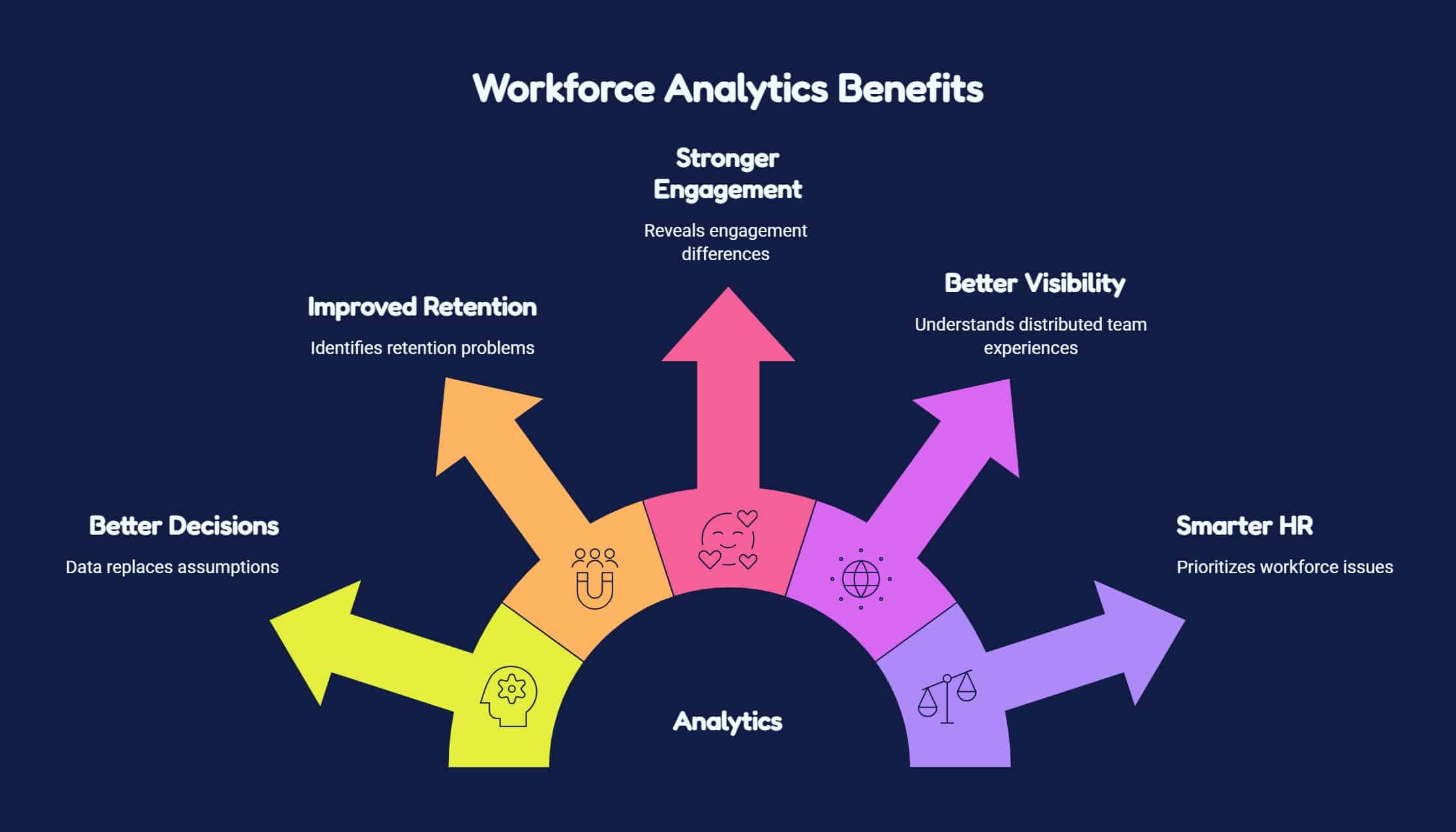
In 2027, workforce analytics insights are essential for any organization aiming to enhance employee relations. These insights help organizations understand the dynamics within their teams, leading to more informed decision-making. By leveraging data, companies can create a transparent organizational culture that fosters trust and openness. The broader point: without these insights, companies risk making decisions based on assumptions rather than facts.
Most companies are still getting it wrong by focusing solely on metrics without understanding the underlying stories. Workforce analytics insights should be used to uncover the root causes of issues, not just to measure performance. This is where many organizations fall short, failing to integrate these insights into their strategic planning, thus missing out on enhancing employee relations and satisfaction. Total People Management's HR consultants, advising firms since 2008, emphasize the importance of integrating these insights into strategic planning.
Identify relational pain points through data analysis
Integrate insights into strategic planning for enhanced employee relations
Use data to foster a transparent organizational culture
Leverage insights for informed decision-making
Workforce analytics insights also play a significant role in compliance and risk management. Regulations like Title VII of the Civil Rights Act and the Americans with Disabilities Act (ADA) require organizations to maintain fair and equitable practices. Analytics can identify potential areas of non-compliance, allowing HR leaders to address these proactively. This proactive approach reduces legal risks and fosters a more inclusive workplace.
HR frameworks such as the Balanced Scorecard and Key Performance Indicators (KPIs) can be integrated with workforce analytics to measure success in employee relations. These frameworks provide a structured approach to evaluating how well an organization is doing in terms of employee satisfaction and engagement. By aligning analytics with these frameworks, organizations can ensure their strategies are both data-driven and aligned with broader business goals.
Step-by-step implementation of workforce analytics involves setting clear objectives, collecting relevant data, and continuously refining the approach based on feedback. Organizations need to establish a dedicated team to manage analytics initiatives, ensuring that insights are accurately interpreted and effectively communicated to stakeholders. This structured approach ensures that analytics initiatives are not just a one-time effort but a continuous process that evolves with the organization.
What Does This Mean for Growing Businesses?
For growing businesses, workforce analytics insights are a game-changer. They provide the data needed to make strategic decisions that align with both business goals and employee needs. This alignment is crucial for sustainable growth and maintaining a competitive edge.
By integrating insights into their operations, businesses can better anticipate challenges and opportunities. This proactive approach helps in creating a data-driven culture strategy that supports long-term success. The takeaway: using these insights effectively can transform a company's approach to employee relations and overall performance.
Align workforce analytics with business goals for sustainable growth
Anticipate challenges and opportunities using data-driven strategies
Transform employee relations through strategic use of analytics
Enhance talent management and development with data insights
The use of analytics in growing businesses also supports talent management and development. By analyzing data on employee performance and potential, businesses can identify future leaders and invest in their development. This not only strengthens the leadership pipeline but also aligns with the organization's strategic goals. Such data-driven talent management strategies ensure that the business has the right people in place to drive future growth.
Regulations like the Age Discrimination in Employment Act (ADEA) and the Pregnancy Workers Fairness Act (PWFA) highlight the need for businesses to be mindful of diversity and inclusion. Workforce analytics can help organizations monitor these aspects, ensuring compliance and fostering a culture of inclusion and belonging. This not only mitigates legal risks but also enhances the organization's reputation as an employer of choice.
Implementing workforce analytics in growing businesses requires a commitment to continuous learning and adaptation. Businesses must stay updated on the latest analytics tools and technologies, ensuring they leverage the best solutions available. This commitment to innovation and improvement is what sets successful businesses apart, enabling them to stay ahead in a competitive market.
The Regulatory and Framework Landscape
Navigating the regulatory landscape is crucial when implementing workforce analytics insights. The Fair Labor Standards Act (FLSA) requires accurate employee classification, which can be informed by analytics. The Genetic Information Nondiscrimination Act (GINA) also plays a role, ensuring that data use does not lead to discrimination. Additionally, the Employee Retirement Income Security Act (ERISA) influences how benefits data is managed.
Frameworks like the Balanced Scorecard offer a structured approach to integrating workforce analytics insights into business strategies. This framework helps organizations measure performance beyond traditional financial metrics, incorporating employee satisfaction analytics into the equation. These regulatory and framework considerations highlight the importance of using data responsibly and strategically.
Understanding the nuances of the regulatory landscape is critical for organizations using workforce analytics. The Affordable Care Act (ACA) impacts how organizations manage employee health benefits, requiring detailed data analysis to ensure compliance. Analytics can help organizations identify trends in health benefits utilization, allowing them to make informed decisions about plan offerings and cost management. This not only ensures compliance but also supports employee well-being.
HR frameworks such as the 360-degree review process can be enhanced with workforce analytics. By integrating analytics into performance reviews, organizations gain a more comprehensive understanding of employee strengths and areas for improvement. This holistic approach to performance management fosters a culture of continuous feedback and development, driving employee engagement and satisfaction.
Step-by-step guidance on integrating workforce analytics into regulatory compliance involves conducting regular audits, maintaining detailed records, and providing training to HR teams. Organizations must ensure that their analytics initiatives are aligned with legal requirements and ethical standards. This proactive approach to compliance not only reduces legal risks but also builds trust with employees and stakeholders.
What Forward-Thinking HR Leaders Are Doing Differently?
Integrating workforce analytics insights into leadership development programs
Using data to inform succession planning and talent forecasting
Creating transparent communication channels to share insights with employees
Implementing continuous feedback loops to refine data strategies
Forward-thinking HR leaders are leveraging workforce analytics insights to drive meaningful change. By integrating these insights into leadership development, organizations can better prepare future leaders. Data-driven decisions in succession planning ensure a robust talent pipeline, supporting organizational growth.
Transparent communication is key. Sharing workforce analytics insights with employees fosters a culture of trust and engagement. Continuous feedback loops allow organizations to refine their data strategies, ensuring they remain relevant and effective. The reality: these practices set the stage for a thriving, engaged workforce.
HR leaders are also focusing on ethical data use and privacy. The General Data Protection Regulation (GDPR) and similar regulations require organizations to handle employee data responsibly. By implementing robust data governance practices, HR leaders ensure compliance and protect employee privacy. This commitment to ethical data use builds trust and supports a positive organizational culture.
Innovative HR leaders are using analytics to enhance employee wellness programs. By analyzing data on employee health and well-being, organizations can tailor wellness initiatives to meet the specific needs of their workforce. This data-driven approach to wellness not only improves employee health outcomes but also boosts productivity and reduces absenteeism.
Step-by-step strategies for HR leaders involve setting clear goals for analytics initiatives, selecting the right tools and technologies, and continuously measuring and refining outcomes. By aligning analytics initiatives with organizational goals, HR leaders ensure that their efforts drive meaningful impact and support overall business success.
Is Your Organization Ready?
As we look to the future, the question remains: is your organization ready to fully embrace workforce analytics insights. Embracing these insights means committing to a culture of transparency and informed decision-making. For organizations willing to take this step, the potential for enhanced employee relations and satisfaction is immense.
Total People Management offers a complimentary Strategy Audit to help organizations leverage workforce analytics insights effectively. Our dedicated People Practitioners work with you to map your current HR risk and identify high-leverage next steps. Discover how these insights can transform your employee relations strategy today.
Preparing your organization for workforce analytics involves assessing current capabilities and identifying gaps. Organizations need to invest in the right technology and talent to effectively leverage analytics. This might involve upskilling current employees or hiring new talent with expertise in data analytics. By building a strong foundation, organizations position themselves to fully benefit from analytics insights.
Organizations must also focus on creating a culture that values data-driven decision-making. This involves training employees at all levels to understand and use analytics in their roles. By fostering a culture of curiosity and continuous learning, organizations ensure that analytics becomes an integral part of their operations, driving innovation and improvement.
Step-by-step preparation for embracing workforce analytics includes setting clear objectives, developing a data governance framework, and establishing key metrics for success. Organizations must regularly review and adjust their strategies based on feedback and changing business needs. This dynamic approach ensures that analytics initiatives remain relevant and impactful, supporting long-term organizational success.
Frequently Asked Questions About Workforce Analytics Insights
How do workforce analytics insights enhance employee relations?
Workforce analytics insights enhance employee relations by identifying relational pain points and fostering a transparent organizational culture. They provide data-driven strategies that align with employee needs.
What role do workforce analytics insights play in a data-driven culture strategy?
These insights are central to creating a data-driven culture strategy. They inform decision-making and help organizations align business goals with employee satisfaction analytics.
How can organizations ensure transparency with workforce analytics insights?
Organizations can ensure transparency by sharing insights with employees and creating open communication channels. This approach builds trust and enhances organizational culture.
What are the challenges of implementing workforce analytics insights?
Challenges include ensuring data accuracy and compliance with regulations like FLSA and GINA. Organizations must also integrate insights into strategic planning effectively.
Ready to take the next step? Book a complimentary Strategy Audit with Total People Management today. In just 30 minutes, our People Practitioners will map your HR risks and priorities, leaving you with a clear written summary and actionable insights. Let's unlock the power of workforce analytics for your organization.